Which model to use for German
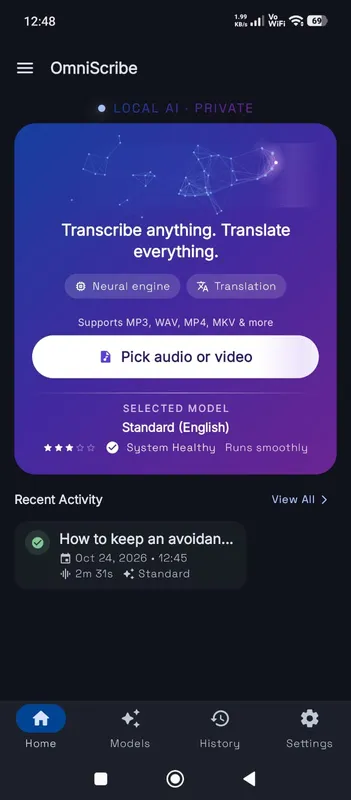
German is rated high with the High accuracy model and medium with Standard and Fast. The difference is real: Standard gives a usable draft that needs a careful read, while High accuracy produces text that is often close to ready. If your laptop can run High accuracy, use it for German; the Models screen tells you how it performed on your device. On a phone, Standard is the practical choice, and it is fine for notes and searching a recording.
Compound words and capitals
German builds long compound nouns, and those are where most mistakes appear: a rare compound may be split in two, or written as the more common word it sounds like. Search the transcript for the key terms of your subject and fix them with Edit. Nouns are capitalised as German requires, and umlauts and ß are written as letters, not as “ae” or “ss”.
Formal and informal address, “Sie” and “du”, is written as heard. A capital “Sie” at the start of a sentence can be ambiguous, as it is in any German text.
Accents and dialects
Standard German from Germany, Austria and Switzerland is transcribed well. Strong dialects are different: Swiss German, Bavarian or Low German speech is often turned into standard German words, or misheard. That is a limit of the training audio, which is mostly standard German. For interviews in dialect, expect to correct more by hand.
Privacy for German users
Many organisations in German-speaking countries have strict rules about where recordings may be processed. Here, the audio is decoded and transcribed inside your browser on your own device; no recording is sent to us or anyone else. The transcript is kept in this browser’s History until you delete it. That makes it a simple fit for research interviews, works council meetings or medical dictation, though your own data protection officer has the final word.
German to English
Tick Translate to English to get English text straight from German speech. It works well with High accuracy and acceptably with Standard.
Live dictation in German
When you record in German, the live draft uses a quicker pass, so it is rated lower than the final text and may stumble over long compounds. That is expected. Keep speaking; when you press Stop, the whole recording is transcribed again with your chosen model, and the compound words usually come out much better in that final pass. Some browsers also offer their own on-device recognizer for the draft.